
_______________
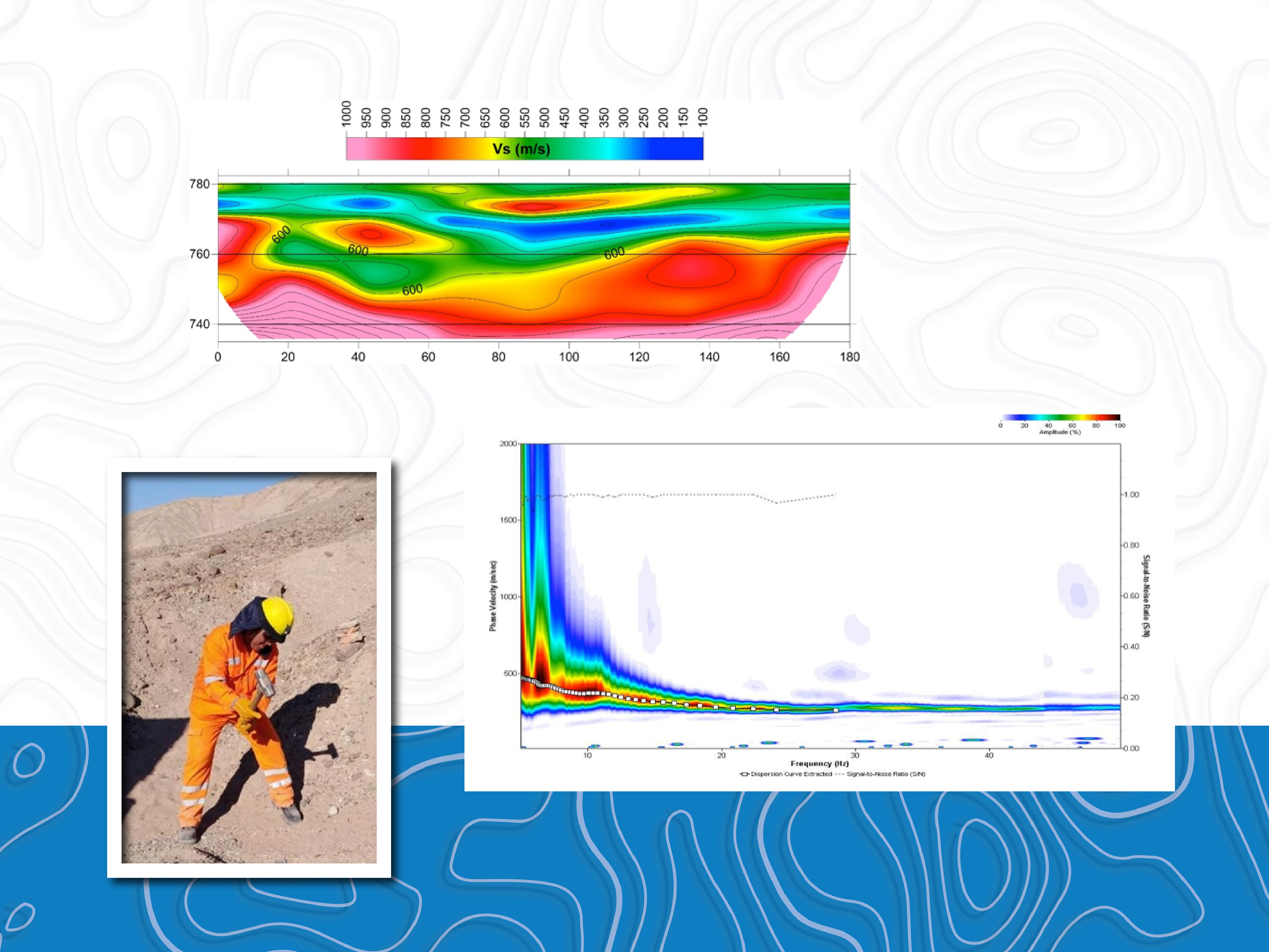
After signal is generated with a strike to the ground, surface waves (Groundroll or Rayleigh) travel below the surface, and with an array of motion sensors known as geophones, we can measure the variation of phase velocity versus frequency of this wave. The scientists at the University of Kansas and the Kansas Geological Survey determined that surface waves have S-waves as its major component, and developed a method de model S-wave velocity out of them. Both MASW and MAM represent the same method, but use different wave sources. MASW uses mechanical impacts to the ground, while MAM uses existing cultural or telluric noise on the ground.
Instruments
- One seismograph, 24 channels
- Two ST24 seismographs
- One 80 lb hydraulic impact source
- 4.5Hz Geophones